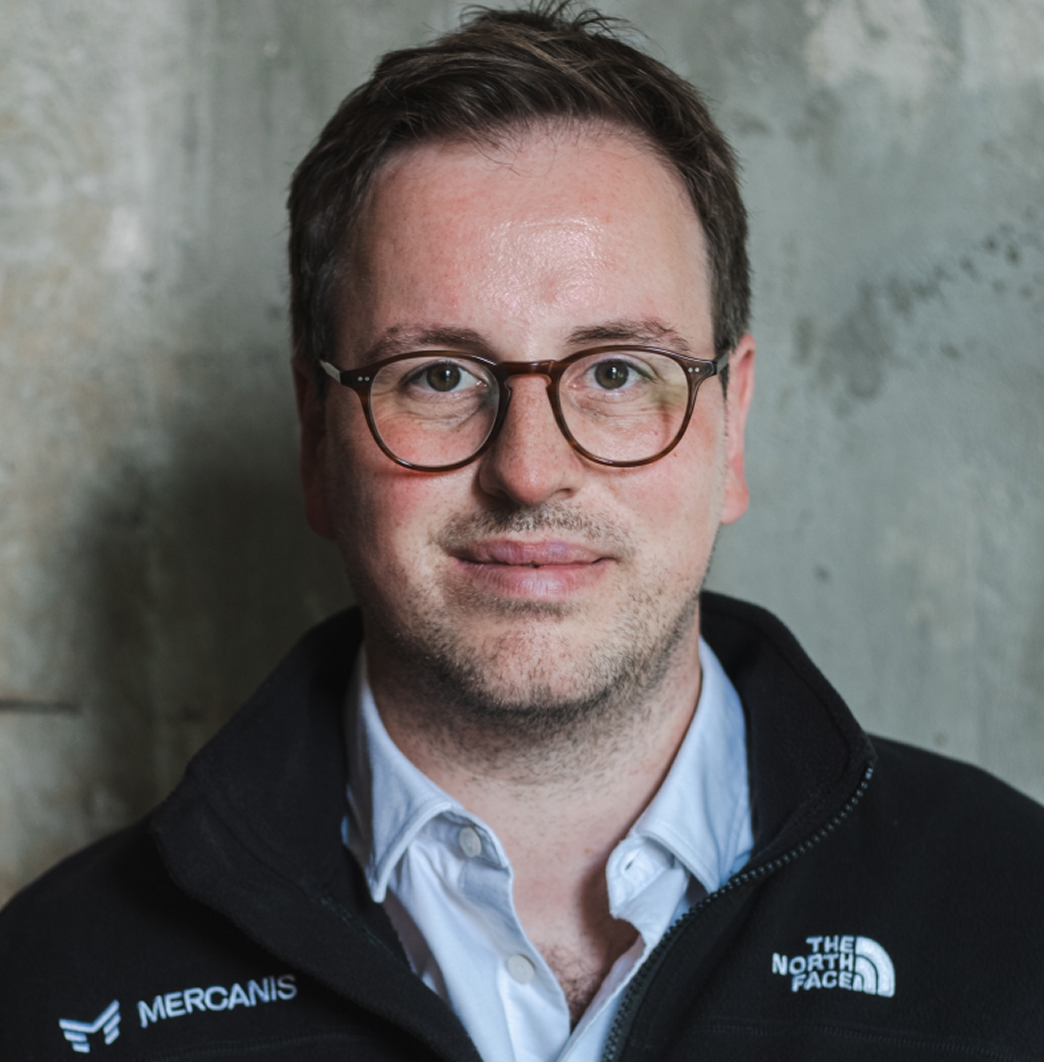
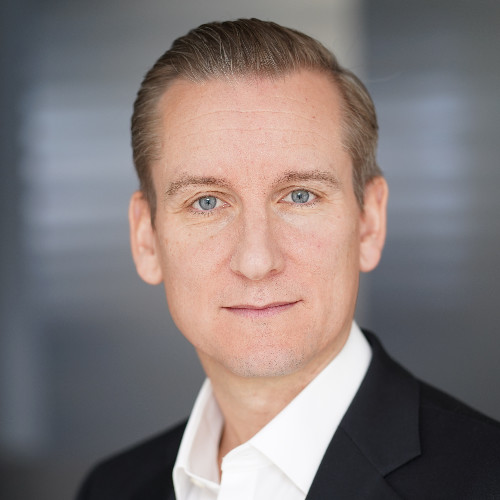
In this episode of Procurement Unplugged, Hans Boot, Partner at Durch Denken Vorne Consult GmbH, speaks with Fabian Heinrich, CEO & Co-Founder of Mercanis, about how procurement has evolved over the past 20 years.
It covers the shift from an operational ordering department to a strategic function that stabilizes companies during crises, creates competitive advantages, and actively contributes to value creation. Hans Boot shares his perspective from decades of consulting practice and highlights why the DACH region in particular still has catching up to do when it comes to strategic procurement and digitalization.
Learn why geopolitical crises have fundamentally changed the importance of procurement, which structural deficits are holding many companies back today, and why digital tools and AI solutions are no longer a nice-to-have for strategic procurement.
Key Topics:
Fabian Heinrich (00:13)
Welcome to a new episode of Procurement Unplugged. Today with Hans Boot, Partner at Durch Denken Vorne Consult, a very well-established consulting firm in procurement. I believe they've pretty much seen it all over the past 25 years. Not just in the German Mittelstand, but also with German enterprise companies.
So I'm especially glad to have you here today, Hans. I'm sure there's one or two anecdotes to share, I'd imagine.
Hans Boot (00:44)
There certainly are. Yes, happy to. I'm glad to be here.
Fabian Heinrich (00:48)
Hans, I think our listeners always find it fascinating to hear how someone ends up in procurement. It's rarely the case that you dream of becoming a buyer or a procurement consultant as a little kid. So maybe it's interesting to hear — how did you get into procurement?
Hans Boot (01:01)
Exactly.
There are very few people who just... I know one head of procurement who knew at 14 that he was going into procurement because his father was a head of procurement. He built his career doing that. And he's still been doing it for 40 years, only in procurement. I personally come from the Six Sigma world. That was the late 90s. Huge hype. Making processes measurable, optimizing them. Then I moved through General Electric, Siemens into manufacturing consulting. And from manufacturing consulting into procurement. That means, until...
Fabian Heinrich (01:18)
Okay.
Hans Boot (01:41)
2006, 2007 I was mainly in manufacturing, assembly, process optimization, and then ended up in procurement. But it was also a deliberate decision, because even back then I thought procurement has the biggest impact on cash flow and EBIT. I'd already seen that in manufacturing consulting projects and thought, if I want to make a real difference, I need to be in procurement.
Fabian Heinrich (01:52)
Looking back now to when you moved into procurement — that's been quite a while — how has it changed over the past two decades?
Hans Boot (02:17)
For one, it was even more operational back then than it is today. Today it's unfortunately still — we'll probably get to that later — very operational, especially in the DACH region. But back then it was a lot of writing purchase orders, printing them out. Some buyer would look them over, put their initials on it, and then it would get typed up again. Very little category management — basically everyone did everything.
That only came later, looking at things by category. Nothing digital, just a lot of paper. A lot of paper, and procurement was sort of the assistant to the other departments. That has changed. You can see that the standing of procurement is much higher today. And what people have realized, perhaps especially in the last five years, is that procurement really is important — especially strategic procurement. And that writing purchase orders isn't procurement. It's just one small part of it.
Fabian Heinrich (02:58)
Mmh.
So essentially the motivation for why you went into procurement — the biggest value lever in a company. I see it the same way, but 20 years ago that apparently wasn't the case at all. It was more of an order office, if I may put it that bluntly. But this whole value-lever idea just wasn't there yet.
Hans Boot (03:31)
Yes.
No, that was a bit of a shock, actually. I originally joined the company as a supply chain manager because I already thought back then that we needed to look at the entire value chain. But nobody understood that. Nobody knew what supply chain actually meant. Not even my boss at the time. My new boss did, though. And that's why I quickly moved from supply chain management into procurement, because I saw that procurement just wasn't running the way it should. That was already clear. And before that, I'd been working in larger...
Hans Boot (04:03)
DAX companies where procurement was already very strategic, and then I came to a large Mittelstand company and it was quite a shock. There was a secretarial office with five women writing purchase orders, and then there were buyers who...
did everything and also purchased everything. So it was different from what I expected. I thought, come on, procurement is important, and everyone will see it that way. And then I walked in and thought, no, only I see it that way. Well, not only me, but at least the people who were there. It was — yes, I woke up to reality pretty quickly. But because of that, I then completely restructured procurement together with my boss at the time. That's where I really learned procurement, and after that I kept
working to raise the standing of procurement. Because everywhere I came in — and it was always large Mittelstand companies — procurement was again just a service department. They need something, procurement fetches it. And I notice that this has changed in recent years. That heads of procurement are also...
Fabian Heinrich (05:00)
Mh.
And you just mentioned the last five years. The last five years have obviously been eventful — COVID, the Suez Canal, wars, and so on. Would you say this is connected to these geopolitical events that keep coming faster and faster? Or what's the reason you say that in the last five years you're seeing faster development at your clients?
On the topic of moving from order office to value driver.
Hans Boot (05:38)
On the one hand, that was obviously a big influence. COVID, supply shortages. Suddenly everyone realized, we can't get our materials anymore. The only ones who can help us are procurement. People realized, we need procurement to keep producing. Even in private life we saw it — certain toys stopped arriving, shoes stopped arriving. I think everyone noticed. It was in the newspapers. Suddenly my friends were talking to me about procurement.
Fabian Heinrich (05:59)
Toilet paper.
Hans Boot (06:08)
Well, they were talking about sourcing. They'd never done that before. Suddenly everyone — I think even politicians started talking about procurement, about sourcing. They'd never done that. So I do believe that all the risks, everything that happened — earthquakes, the harsh winter in Texas, and now tariffs and so on — all of that has had a positive impact on the perception of procurement. But I think what contributed the most to people paying more attention
to procurement is that they realized procurement was simply poorly set up. In bad times, you notice how good something really is — how good a department really is. And before that, everything was running great. From 2011 to 2019 it was all smooth sailing. Prices kept coming down, everything just worked somehow. And then suddenly people realized that procurement apparently isn't that good after all, because an order office can't respond to that.
Fabian Heinrich (07:03)
Mmh.
Hans Boot (07:03)
They had no risk management, no fast processes, no data management. Companies realized they probably could have responded to these risks
better if they had been working strategically. And that's why many companies have started to critically examine how good their procurement actually is. We rarely did that before, because everything was running fine. And then, when things stop working, you start thinking about it. So on the one hand, yes, the risks have led to procurement being seen as more important. But people also started asking, well, is our procurement still...
what it should be? Or should we restructure how we do procurement? And that's what we're seeing.
Fabian Heinrich (07:48)
And is that partly by industry, or — you mentioned earlier that the DACH region has been behind for a while when it comes to procurement. So does it differ by industry or country, or how would you describe it?
Hans Boot (08:01)
Yes, you do notice that the automotive industry — they have their own problems now, of course — but procurement there was already more strategic, probably because the pressure from above was greater. But otherwise, machinery and plant engineering,
retail, medical technology — there were many Mittelstand companies. The larger corporations are a bit better positioned. They also have bigger procurement teams, more money, and can do more. But the medium-sized and smaller Mittelstand companies are often just not well set up. So it's cross-industry. And when it comes to countries — I've seen this before — there are countries that are simply...
more strategic in their thinking. Japan, for example. I once worked at Kubota, and they were already thinking very strategically early on and doing a lot of supplier development, which wasn't as common in Germany. America naturally has a much bigger focus on change management, which isn't really the case here in Germany. Italy was already digital very early on — many of the heads of procurement I worked with in Italy, and clients or suppliers, were digital early on, more digital. Business cards,
Hans Boot (09:16)
QR codes instead of business cards — small things like that. So the DACH region is a bit behind when it comes to strategic thinking and digitalization and those kinds of things.
Fabian Heinrich (09:29)
And if we boil it down — what are the biggest challenges for companies in the DACH region when it comes to making procurement more strategic?
Hans Boot (09:42)
Well, first there's competition from Eastern Europe. It used to be mainly from China — and it still is. But I'm noticing more and more competitors from Eastern Europe because they're simply getting better at supplying, especially with turned and milled parts and manufacturers like that, but of course at lower costs. If I pay 8 euros per hour in Romania and 50 here, that's quite a difference. So competition is getting closer.
Fabian Heinrich (09:47)
Okay.
Hans Boot (10:10)
No longer way out in Asia or India, but right here in Eastern Europe. The second thing is that we've actually always had a talent shortage in strategic procurement. Maybe not in operational procurement, but in strategic procurement for sure. Companies are feeling that even more now because a lot of experienced people are leaving. All the boomers are slowly heading into retirement. That means experienced strategic buyers who've been doing this for years are no longer there. They simply can't find the people anymore. Even if they want to, they just can't get the people
Hans Boot (10:40)
for strategic procurement. And of course we have many more topics like sustainability, compliance, now tariffs, more and more data that they somehow need to work with, but it's not feasible. Excel is often no longer enough. We used to just make a pivot table and everything was fine. That doesn't work anymore. And there are more and more AI solutions that obviously help.
So on one side there are all the topics like sustainability, compliance, and so on, then the competition getting closer from Eastern Europe, and the fact that I'm noticing more and more risks appearing.
After COVID people thought, well that was bad — then came the earthquakes, the Suez Canal, the harsh winters, and now suddenly tariffs, the situation in Greenland, and so on. There are all these issues coming faster and faster. Procurement has to react faster and faster when something happens. It used to be much calmer. Price increases that didn't exist before. Steel used to just go up a little, down a little. Energy,
Hans Boot (11:46)
up a little — but that's no longer the case either. It means everything has become more unpredictable. And unpredictable means we need strategic people who proactively think about what could happen. And for that, of course, I need a procurement function. That means...
Fabian Heinrich (11:59)
So in terms of solutions — first we need to establish a target operating model for strategic procurement, then get the right talent for it, and then digitalize the respective topics you want to implement. Or did I get that right?
Hans Boot (12:05)
Yes.
Yes, exactly, although digitalization actually comes even earlier, because I don't think we'll be able to find all the talent we need. We simply can't get enough people for more work. So we have to make sure that operational tasks are reduced. We should have been doing that 20 years ago, really, but now the pressure is coming from outside. In the past, we could still find people — companies just hired more, and it all worked. Now, with cost pressure, competitive pressure, plus we can't find the right people anymore, the only option is to reduce the workload,
Hans Boot (12:47)
especially operational workload. So it used to be, it would be nice if we digitalized — a nice-to-have. But now it's become a must-have. I believe some companies won't survive if they don't start digitalizing, because they simply won't be able to find the people anymore. And all the new topics with more data, different data, data quality, compliance, tariffs, other risks — they're all hitting at once.
Fabian Heinrich (12:57)
Yes.
And if you look at digitalization over the last 20 years, the story was always: yes, you need to digitalize, change management, and then you're 30-40% better. But now we're in a new world with so-called AI agents, where you can, in quotes, outsource entire tasks or task areas to agents — and suddenly we're talking about 80-100% automation. We're talking at a completely different level, where instead of
a team of 100 buyers you might only need 15. Which of course also helps with the talent shortage and the workload issue. What's your view on that — are these agents already delivering the value, or what are you currently seeing?
Hans Boot (14:07)
Yes, well first of all, I don't think — 80 to 100 percent maybe not, because I believe...
COVID also showed us that. We still need a few operational buyers who actually talk to suppliers. Again, I believe communication is even more important today than it used to be with suppliers. But instead of 10, we might only need 3. So around 70 percent of operational tasks. We don't need anyone to write purchase orders. We can — AI agents or software tools can simply help us know what's coming. If we have a forecast, we can then automatically order, bundle, have the database read automatically,
Hans Boot (14:42)
invoices — meaning all the tasks in the purchase-to-pay process, a lot of that we no longer need people for. But for communication when something goes wrong with suppliers, we still do. What I'm seeing, though — 20 years ago there were just a few big players, two or three dominant ones handling the whole topic, and that was fine at the time, but what I think today...
What we need today are more flexible solutions. I don't think we need one massive system that can do everything, but rather tools that respond flexibly to specific customer requirements. That say, you know what, you need this, you'll get it. So more focused tools that do exactly what the customer needs. Not one giant tool that claims to do everything.
Fabian Heinrich (15:22)
But are the customers really that different, or isn't it the case that the challenges are actually always the same?
Hans Boot (15:40)
Well, strategic procurement too — the structure, the processes have stayed the same. 25 years ago, strategic procurement was essentially the same as today, just that today there are more risks because everything has become a bit more unpredictable. So we should have had more flexible solutions 20 years ago. But they didn't exist. I think most of them only appeared in the last 4, 5, 6 years. And even now there aren't that many.
Fabian Heinrich (16:02)
Yes.
Hans Boot (16:08)
And that means...
Fabian Heinrich (16:09)
So it's less about needing a separate solution for every company, and more that the requirement for a procurement suite or procurement platform is that it's flexible in how it's used, that I can adapt it somewhat to my needs.
Hans Boot (16:28)
Yes, you don't need — no, not everyone needs a different solution. One solution is enough, but it just can't be rigid — it needs to be flexible. It needs to be — when a customer says, I have this problem and that problem — they all say, oh, every company is different, which of course isn't the case. I've never seen that in 25 years, a company that was truly completely different. So we need a solution that responds flexibly to requirements. And I also believe one that genuinely has an interest in understanding strategic procurement and operational procurement.
Fabian Heinrich (16:33)
Yes.
Hans Boot (16:58)
That's something I miss with some of the big ones — you're just a tool to them. You could maybe compare it to SAP and similar smaller ERPs. I believe it helps the customer more when they get a solution that truly understands what they need and actually delivers it.
Fabian Heinrich (16:59)
Mhm.
Yes.
Hans Boot (17:19)
And also that you can customize it a bit for the customer. And I believe that's what many of my clients are looking for. They're not looking for the big solution — they have requirements and they need a solution for those. And those have been around for four, five years now, more than before. Thankfully. I would also implement a different solution today than 20 years ago.
Fabian Heinrich (17:37)
Okay.
And
Yes, makes sense. I mean, everything evolves and moves forward. And if companies or technology providers stand still, that doesn't help anyone. And when you now look at the...
Hans Boot (17:57)
That's exactly why I'm glad that tools like Mercanis exist, because they're different from the big ones. And I notice that in feedback from my clients as well.
Fabian Heinrich (18:05)
Yes.
You mentioned at the beginning that you went into procurement because it's the biggest value lever in a company. So it often determines whether a company has the right margins or maybe even goes insolvent, and so on. What can we do now to become a frontrunner in the DACH region, to stop lagging behind and maybe have a more thriving economy again?
Hans Boot (18:34)
I think one topic is — well, we've already talked a lot about digitalization, that's clear — but one topic I think is leadership.
Fabian Heinrich (18:39)
Yes.
Hans Boot (18:42)
We simply need different leaders in procurement, in many cases. Leaders who aren't just title-holders coasting along until retirement, but who genuinely think about how they can advance their procurement function and how they can do internal marketing within the company so that everyone understands what procurement actually does. Wherever I was, the first thing I did was explain to all the other departments what strategic procurement actually means. Because many people don't know. The business units often just don't understand what strategic procurement is.
Fabian Heinrich (18:42)
Okay.
Hmm.
No.
Hans Boot (19:11)
And procurement leaders need to do a better job of explaining that internally. They need to be convincing. They don't have to be as extroverted as sales, but they at least need to sell themselves. And I believe the better you sell procurement as a team, the better you demonstrate what you can achieve. That's how I got budgets, too. I showed that if I digitalize, reduce operational effort, create more room for strategic work, I can achieve this and that. And that's how I got my budgets.
That's still not being done enough. The thinking is, well, they'll see what we do, how great we are — someone will come along. No, leaders need to proactively demonstrate how good procurement is and also proactively identify what they need to work better. And then one of the solutions is digitalizing the tasks that are simply pointless.
Fabian Heinrich (19:57)
Yes.
And I'd say this — on the topic of missing the digitalization wave, do you think one of the big issues was maybe that the technology wasn't good enough, or that the returns from digitalization weren't sufficient? And now with the technology leap — with large language models, with agents — is that accelerating things, so that many are now saying, hey,
the results are good now, or now I'll finally tackle this — what are you seeing with your clients? Is there more urgency to act, or more belief in the solutions?
Hans Boot (20:42)
Yes, for one, many people naturally want to talk about IT now. Things like ChatGPT help with that — not because they can do everything, but at least they help shift people's mindset so they realize there are cool solutions out there that aren't massive, that they can actually use. And that's why they're also looking more at other solutions that can be used in procurement. So on the one hand, there are now more solutions, and
Fabian Heinrich (20:52)
Yes.
Hans Boot (21:11)
I also notice that — as I said, with the cost pressure being so high, they can no longer just hire more people. Aside from the fact that they can't even find them — they simply can't inflate their procurement teams. They used to do that. Hire a planner here, an operational buyer there. That's no longer possible because CFOs are much more focused on costs and much more focused on what value procurement actually delivers. So they're being forced internally to think about how to become more strategic and
Fabian Heinrich (21:24)
Hmm.
Hans Boot (21:41)
work better, and there are also more options now. I think the combination of those two things is actually quite a good thing. Although I also notice that there are now so many solutions that people don't really know how to decide anymore. A bit of a can't-see-the-forest-for-the-trees situation, which is obviously the downside. So they need to get better at...
Fabian Heinrich (21:55)
Hmm.
Hans Boot (22:03)
Yes, better at evaluating what's out there. When there were only three tools, 20 years ago it was simple. I'd look at the three tools. Today you have to evaluate ten.
Fabian Heinrich (22:08)
Yes, that's true. That brings new challenges of course. Which tools do I pick? You probably see it too — do I go with one of the new players, a Mercanis, a Tacto, whatever else.
Hans Boot (22:17)
Yes.
Exactly. And of course that's again about sales and marketing for the tools. That's also what matters here. This podcast is partly about helping people understand what these tools can actually do. I think that's even more important today, because when there are more tools, you have to find a way to stand out from the crowd. And not many are doing that, unfortunately. You're doing it, a few others too, but not all of them — instead they hope, well, we're well known. It'll work out somehow.
Fabian Heinrich (22:33)
Yes.
Yes.
That the customers will come.
Hans Boot (22:53)
Exactly, but that's no longer the case. That's just not how it works today anymore.
You have to show what you can do, and that's more important today than ever. And I also believe...
Fabian Heinrich (23:03)
Yes, with an eye on the clock, one last question. If we think further ahead, three, four years toward 2030 — what would be your vision, or your firm's vision at Durch Denken Vorne, for procurement in 2030? Where is the journey heading?
Hans Boot (23:21)
I believe that procurement as a standalone department will increasingly disappear and become more and more part of supply chain. However you want to call it — increasingly working closely with assembly or production, logistics, quality.
Fabian Heinrich (23:30)
Mhm.
Hans Boot (23:34)
Production planning, goods receiving, and perhaps even sales. Procurement needs to know quickly what the customer actually wants. Today, not 23 weeks later when the contract is signed. And they also need to know what problems the sub-tier suppliers are having. Which isn't the case today. That means today, very few have visibility across the entire value chain. And I believe it will increasingly move toward either cross-functional teams or one large department where procurement,
production planning, and production are all together. They can then look at the entire value chain, and for that they obviously need all the data. That's why we need a lot of digital tools, because data doesn't just appear by itself. They need a fast forecast that reaches them quickly, they need to be able to translate that into production planning, translated into a procurement plan, and then have that go quickly to the supplier. So in the future we'll have even more data that we
Fabian Heinrich (24:08)
Hmm.
No.
Hans Boot (24:34)
can't process today — certainly not without tools. And by 2030 we'll have even bigger problems with skilled workers. All the boomers will already be retired by then, I think. And the younger generation isn't the one going into procurement, from what I can see.
Fabian Heinrich (24:46)
Mmh.
Hans Boot (24:52)
And they don't always want to take on leadership roles either. So there will probably be an increasing shortage of leaders as well. And without good leaders, it will also be difficult to build up strategic procurement and get budgets for any tools.
Fabian Heinrich (25:06)
Yes, no, a very exciting vision — that it essentially becomes a fully integrated procurement function with quality, with SCM, maybe here and there a bit of finance as well. Quite an interesting thesis. Hans, thank you so much.
Hans Boot (25:21)
Yes.
Also with KPIs.
Also that we have KPIs automatically. How often I see people spending hours evaluating KPIs in Excel sheets. Yes, exactly.
Fabian Heinrich (25:34)
So essentially fully integrated analytics at the push of a button.
Still a big topic. Definitely. So to sum it up — from order office to data-driven value driver.
Hans Boot (25:50)
Yes exactly. And this is — regardless of this podcast — this is genuinely my personal opinion: in the future, without digital tools we simply won't survive in strategic procurement. It just won't work. It's not — I'm saying now — it's not a nice-to-have, it's a must-have. And all leaders need to understand that it just won't work anymore without them.
Fabian Heinrich (26:02)
Yes.
Thank you for such a fascinating and engaging conversation. I think we could have easily talked for another hour or two and it wouldn't have gotten boring. So thank you, Hans, for your time and for stopping by the podcast. I think a very insightful contribution for our listeners.
Hans Boot (26:17)
Wow, I just noticed — 26 minutes. That went fast.
My pleasure.