Procurement is not in a short-term crisis, but in the midst of a structural shift. Global supply chains are becoming less stable, geopolitical dependencies are becoming more visible, and economic conditions are changing faster than organizations can adapt their processes. At the same time, artificial intelligence is accelerating the way decisions are prepared, made, and implemented. These developments are affecting a function that has long been designed for predictability, efficiency, and clearly defined processes.
What has worked for years, reducing costs, standardizing processes, managing risks, is increasingly reaching its limits. Procurement is faced with the task of remaining not only efficient, but above all capable of acting: amid uncertainty, growing complexity, and significantly higher expectations from the business. This shifts the benchmark for success. It is not the optimization of individual process steps that determines the future viability of procurement, but its ability to create value, enable speed, and secure strategic decisions.
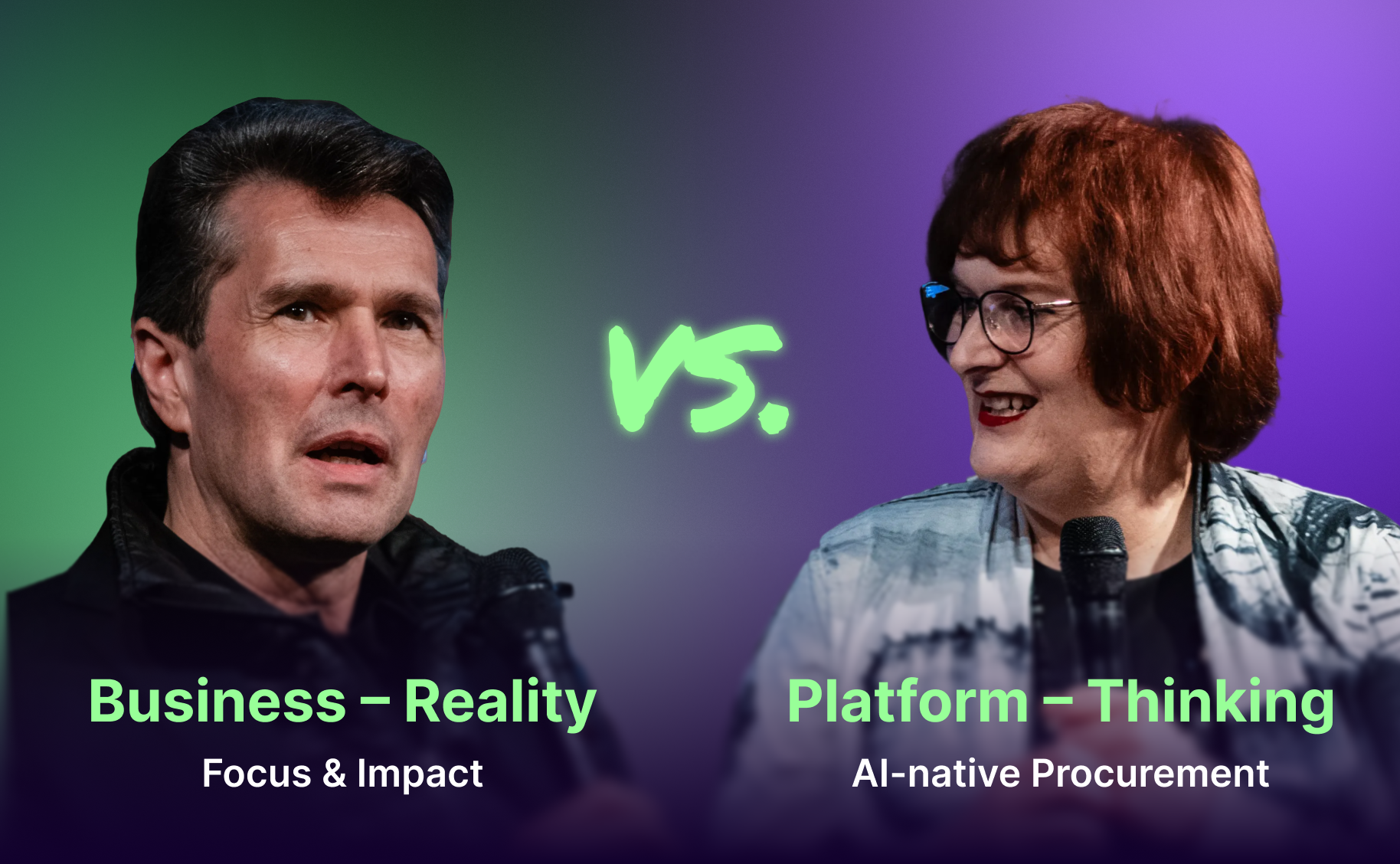
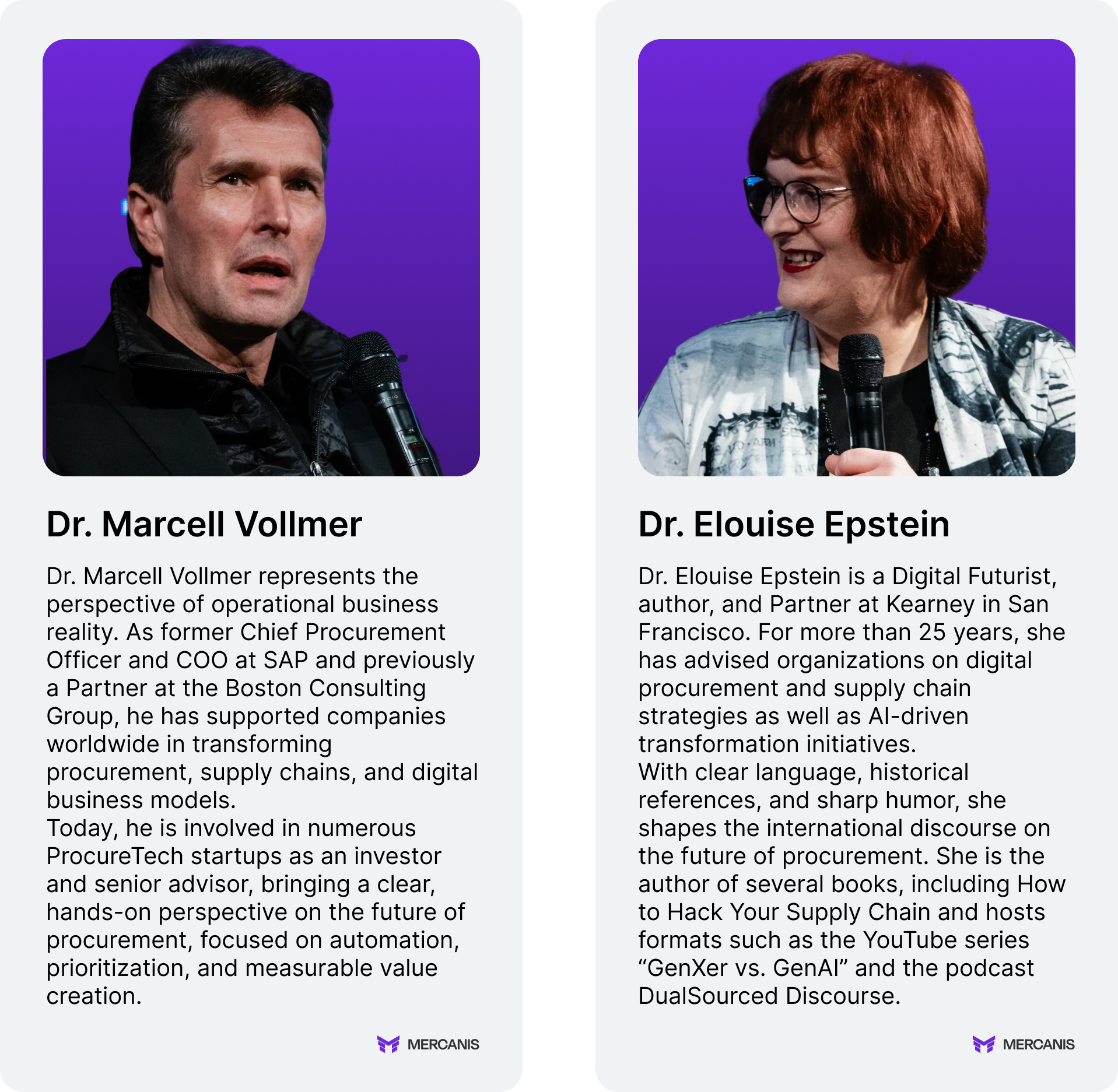
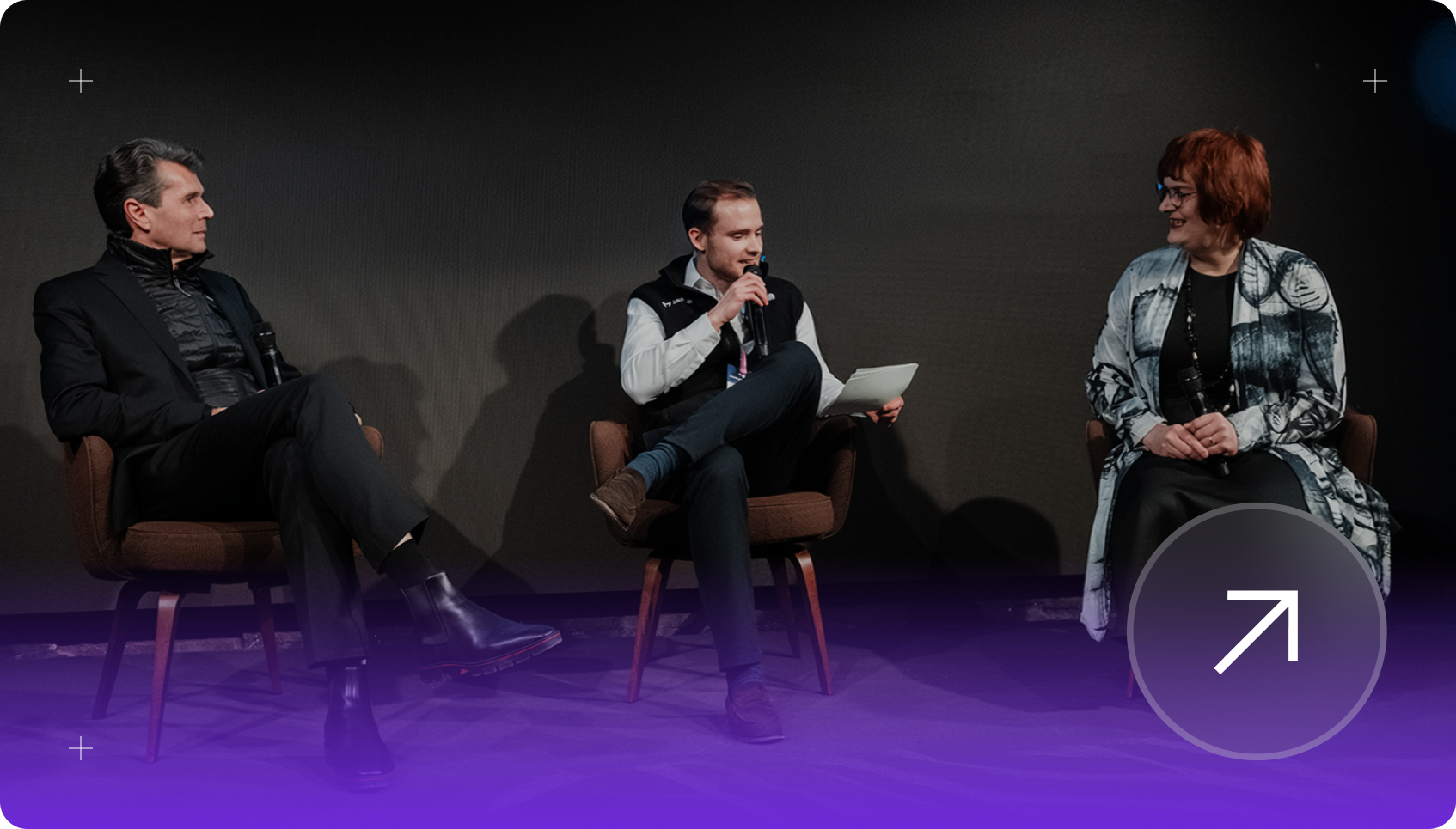
How this change will take shape in concrete terms cannot be deduced from a single school of thought. Two perspectives that have accompanied procurement for many years from very different roles provide guidance.
Both perspectives start at different points but lead to the same conclusion: procurement must be structurally realigned.
The following sections show where their approaches differ and where they surprisingly converge.
Both experts agree in their assessment of current developments:
The classic understanding of procurement as an independent function with clearly defined processes and responsibilities is no longer valid. Procurement is no longer an end in itself, but increasingly part of corporate value creation, where decisions have an impact.
Today, value is not created through consistent adherence to processes, but through concrete results. The decisive factors are the ability to ensure supply even in uncertain times, to enable speed in decision-making and implementation, to drive innovation together with suppliers, and to build sustainable, resilient relationships along the supply chain.
Against this backdrop, automation is not a future scenario, but a pre requisite. The central question is no longer whether to automate, but which tasks can be sensibly automated and where human skills such as judgment, communication, and relationship management remain indispensable.
Opinions differ on how this change should be implemented in concrete terms.
For Dr. Elouise Epstein, the so-called 10× era does not describe an abstract concept of the future, but rather a concrete shift in the demands placed on organizations: with the help of technology, especially artificial intelligence, procurement functions should achieve significantly higher output without using proportionally more resources. It is not about "more work," but about fundamentally different ways of working.
Against this backdrop, the central change for Epstein is that procurement no longer exists as asupporting function alongside the business. In a 10× logic, procurement merges with the operational units. Decisions about suppliers, risks, and innovationsare made where they have an immediate impact, not in a separate department with downstream processes.
In her view, this change is only possible with a fundamental technological shift. Fragmented tool landscapes, manual integrations, and historically grown processes cannot simply be "accelerated." They must be replaced.
Epstein advocates for AI procurement platforms that not only digitize processes but also serve as an intelligent foundation:
· Business logic is orchestrated centrally,
· agents take over operational activities,
· and workflows run largely autonomously.
This is not about returning to the classic suite, but about a new platform logic that enables scaling, automation, and learning.
This shift is also radically changing the skill set requiredin procurement. Classic activities such as negotiations, contract analysis, and risk assessments are increasingly being performed more effectively by AI.
The human role is shifting to other levels:
· Creativity to open up new solution spaces
· Storytelling to get stakeholders and suppliers on board
· Learning ability to continuously adapt to new technologies.
Epstein criticizes the fact that many job profiles continue to focus on "yesterday's skills" and thus fail to address the reality of the coming years.
Dr. Marcell Vollmer approaches the future of procurementfrom a different angle. For him, every transformation begins not withtechnology, but with a specific business problem.Too often, organizations introduce tools because they appear innovative, without clearly defining what problem they are supposed to solve.
His plea is clear:
First clarify priorities, then select solutions. Not everything at once, but in a focused and impact-oriented manner.
A central point in Vollmer's argument is the clear differentiation between operational and strategic procurement. Activities in operational and indirect procurement often follow standardized patterns, are highly transactional in nature, and can therefore be automated to a large extent. This is precisely where Vollmer sees one of the greatest potentials of modern technologies: increasing efficiency, shortening through put times, and significantly reducing the use of resources through automation.
Strategic procurement, on the other hand, fulfills adifferent function. It remains relevant where real value is created, for example, through the active involvement of suppliers in innovation processes, the establishment of resilient supply chains, or the management of critical dependencies. These areas are less about transactions and more about decisions, relationships, and long-term impact.
Where procurement cannot or does not want to make this strategic contribution, Vollmer draws a clear conclusion. The function moves closer to the operational business units or is completely absorbed into them, while classic tasks such as governance, compliance, and transparency are increasingly secured by technological solutions. Procurement is thus changing not only its tasks but also its organizational anchoring.
Vollmer also remains realistic when it comes to data and integration. Perfectly maintained master data is an illusion, he says. Instead, AI must help make data usable without attempting to "clean" it completely.
Integration should not be an end in itself. The key is to transfer only the data that is actually needed, efficiently, automatically, and cost-sensitively.
Both experts agree on this key point:
Intelligence must be separated from transaction systems.
ERP and legacy systems remain important, as a "system of record." But business logic, decision-making, and control belong at a higher level:
· a platform
· that uses data intelligently,
· orchestrates agents,
· and enables procurement to take action.
Suppliers are also playing a new role in this: they are increasingly becoming an additional source of truth, data, and innovation.
Dr. Elouise Epstein is particularly clear in her criticism of the current approach to transformation: use case-driven pilot projects often lead to a dead end. There is a lot of testing, but little scaling.
Instead, she calls for a change of perspective:
Transformation begins with personal productivity.
Anyone in procurement today who still needs weeks for analyses, strategies, or tenders is no longer working in line with the times. AI can drastically accelerate these activities, immediately, without lengthy roadmaps.
Vollmer adds a pragmatic dimension to this point: productivity also needs focus. Too many parallel initiatives do not lead togreater impact, but to fragmentation.
The discussion deliberately does not lead to a simple "either/or" answer. Neither a completely monolithic solution nor an uncontrolled tool stack is the right way to go per se. The decisive factor is not the architecture itself, but the target vision that guides all decisions.
This target vision begins with a few fundamental questions:
Which problem currently has the highest priority? In which areas can automation be used sensibly without losing value? Where does strategic added value actually arise, for example, through innovation, resilience, or close supplier relationships? And last but not least: How should procurement be organized and technologically positioned in three to five years?
Only when these questions have been clearly answered can an assessment be made as to which platforms, agents, or selective solutions make sense and which would merely create additional complexity. Technology thus does not follow the hype, but rather a clear, long-term orientation of procurement.
For Dr. Elouise Epstein, the outlook is characterized above all by increasing uncertainty. She believes that geopolitical tensions, trade conflicts, and structural disruptions will continue to destabilize the global business world. In such an environment, productivity becomes a prerequisite for the ability to act. Procurement must achieve significantly more than it does today – not through additional resources, but through fundamentally different ways of working, supported by technology and automation.
Dr. Marcell Vollmer formulates his forecast in more concrete and organizational terms. He expects operational procurement activities to be largely automated by 2030. Strategic procurement, on the otherhand, is subject to a clear performance requirement: either it delivers measurable value – for example, through innovation, resilience, and controllability – or it shifts closer to the specialist departments. Tasks such as governance, compliance, and transparency are increasingly being taken overand monitored by technological systems.
Together, both perspectives paint a clear picture: the future of procurement is no less demanding, but fundamentally different in its organization.
The discussion makes it unmistakably clear:
The future of procurement will not be decided by individual tools, feature comparisons, or the next software introduction. It will be decided by a new operating model and by the willingness to leave familiar roles, structures, and thought patterns behind.
Organizations that continue to try to meet new requirements with old models will fail due to complexity, speed, and pressure to meet expectations. Successful procurement organizations, on the other hand, combine platform thinking with clear business responsibility, automation with human control, and technological possibilities with consistent prioritization.
The central question for procurement leaders is therefore no longer:
What solution should we buy next?
But rather:
How do we organize impact in a world where AI scales work and people redefine responsibility?
1. Automation is not a project, but a basic assumption
Operational and transactional activities are being automated – not sometime in the future, but right now. Anyone who still sees automation as an optional efficiency project will fall behind structurally. In the future, the actual task of procurement will not be execution, but rather control, prioritization,and decision-making.
2. Strategic procurement must deliver value or disappear
Strategic procurement justifies its existence not through presence, but through impact. Where it does not make a measurable contribution to innovation, resilience, or business success, it will be integrated more closely into the business or dissolved organizationally. Technology takes over governance and compliance, value is created by people.
3. Technology follows the target vision, not the hype
Platform or point solution is not a matter of faith. What is crucial is a clear target vision: Which problems have priority, where is real value created, and how should procurement be positioned in three to five years? Only then will itbecome clear which platforms, agents, or tools make sense and which merely create new complexity.
Watch the full Panel here.

Artificial intelligence is changing the structure of procurement. Operational, transactional activities such as tenders, bid comparisons, contract analyses, and risk assessments can increasingly be automated. This shifts the focus of procurement from execution to control, prioritization, and strategic decision-making.
The future of procurement means that traditional, functionally separatemodels are no longer sufficient. Procurement is becoming more integrated into the business, working in a data-driven manner and using AI to act faster, more resiliently, and more effectively. Success is no longer measured by processes, but by value contribution.
The 10× era describes the aspiration to achieve significantly higher output in procurement with the help of AI and automation – without using proportionally more resources. It is not about increasing efficiency in the existing model, but about fundamentally new ways of working and forms of organization in procurement.
Operational procurement encompasses transactional activities such as order processing, invoice verification, or standard tenders and can be highly automated. Strategic procurement, on the other hand, focuses on value creation through innovation, supplier relationships, resilience, and risk management. This area will continue to be shaped by humans in the future.
Largely yes. Many operational tasks in procurement can be automated using AI-supported systems. However, operational procurement will not disappear completely, but will be technologically orchestrated. Humans will take over management, control, and exceptional decisions.
Humans will remain central, but in a different role. Creativity, judgment, communication, storytelling, and relationship management will become more important. AI will take over routine tasks, while humans will be responsible for impact.
Platform thinking describes the use of a central, AI-native procurement platform that bundles data, business logic, and agents. In contrast to fragmented tool landscapes, a platform enables scaling, automation, and continuous learning across the entire source-to-pay process.
There is no blanket answer. The decisive factor is the target vision of the procurement organization. Companies should first clarify which problems have priority, where automation makes sense, and where strategic value is created. Only then can it be determined whether a platform, a point solution, or a combination makes sense.
Many transformations fail because they focus too heavily on use cases, pilot projects, or individual tools. Without a clear target vision, prioritization, and a new operating model, isolated solutions emerge that can not be scaled and do not deliver sustainable added value.
By 2030, operational procurement processes will be largely automated.Strategic procurement will either clearly add value or be firmly anchored inthe business organization. AI will monitor governance and compliance. Procurementorganizations will become smaller but more effective.

Fabian Heinrich is the CEO and co-founder of Mercanis. Previously he co-founded and grew the procurement company Scoutbee to become a global market leader in scouting with offices in Europe and the USA and serving clients like Siemens, Audi, Unilever. With a Bachelor's degree and a Master's in Accounting and Finance from the University of St. Gallen, his career spans roles at Deloitte and Rocket Internet SE.