Monday Morning, 8:15 AM.
47 new messages. Three suppliers are waiting for a response on open certificates. A request from a business unit has been sitting unaddressed for two weeks because the necessary information hasn't been gathered yet, and the team is pushing for a decision. Legal needs a response on a contract issue that should have been resolved last week. For the upcoming quarterly review with the CFO, there's still no clear picture of what was purchased where. The data exists, but no one has had time to pull it together.
This is not an exceptional day. This is everyday life.
And the strange thing is: most procurement professionals reading this will nod. Not because they're doing poor work, but because procurement is structured in a way that makes important work almost inevitably fall behind.
The underlying problem is structural. The role of procurement has fundamentally changed, and so has the complexity that needs to be managed on a daily basis.
According to KPMG, 77 percent see supply chain risks and 66 percent see regulatory and ESG pressure as their biggest challenges. Procurement today must evaluate suppliers not only on price and quality, but also on whether they operate in geopolitically sensitive regions, meet ESG criteria, and whether their sub-suppliers are compliant. These are tasks that, in this form, simply didn't exist ten years ago or were far less of a priority. Procurement has long ceased to be a pure ordering function. It is a strategic function on the front line. According to Deloitte, 67 percent of CPOs name the integration of AI and digital technologies as a top priority, because manual processes no longer scale at this level of complexity.
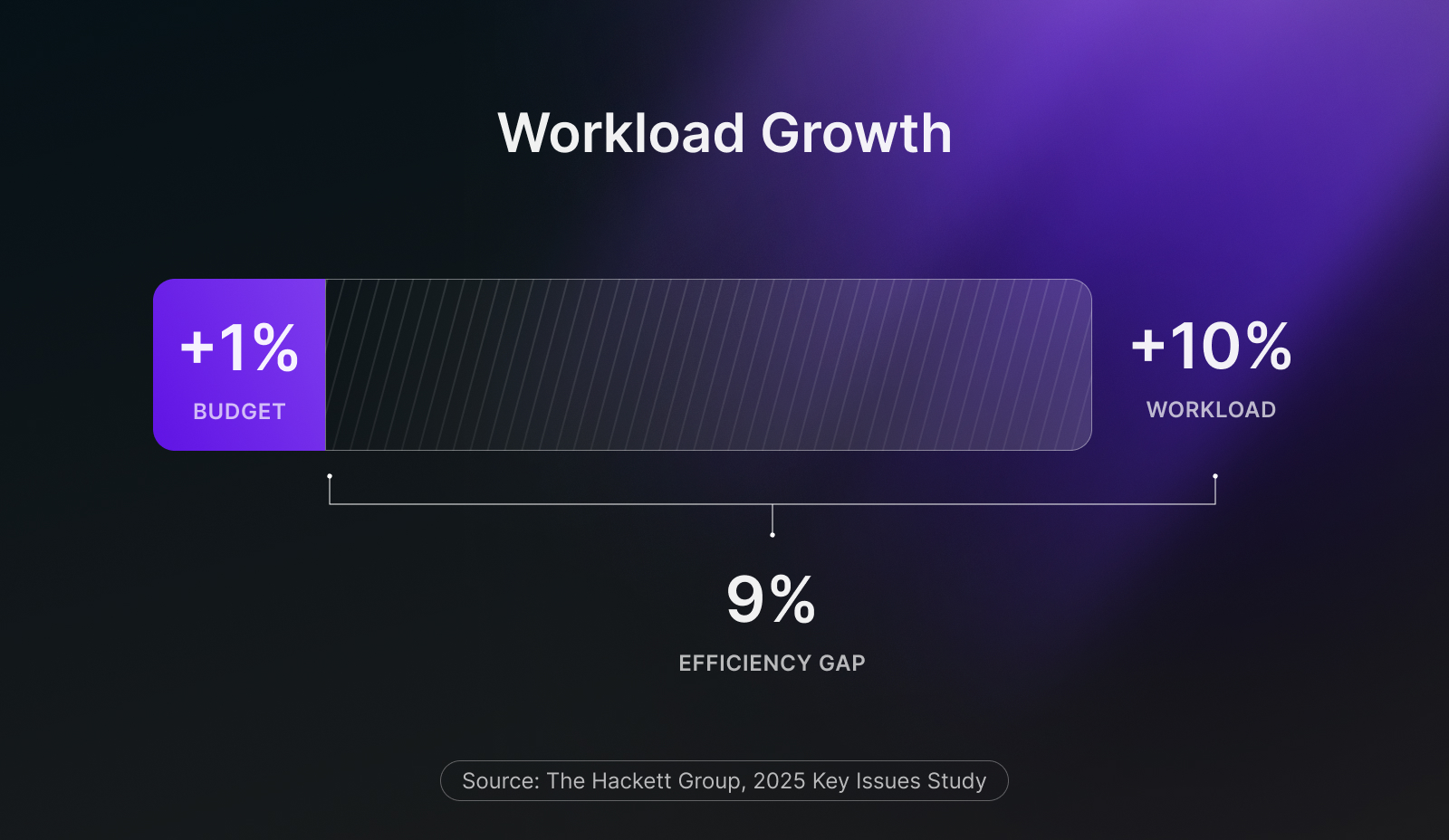
Yet despite this clear recognition of urgency, working methods and process structures in many organizations have not kept pace. The Hackett Group shows a significant gap for 2025 between rapidly growing workloads and barely increasing resources.
Hiring qualified specialists is hardly realistic for many organizations, not only because the right talent is difficult to find, but also because the necessary budgets are lacking. And even where investment is made in more headcount or new tools, the result is often the same: more staff means more coordination overhead. More tools mean a more fragmented software landscape, but no real capacity gain.
Operational pressure is therefore not the result of isolated bottlenecks, but an expression of a way of working that can no longer keep up with growing demands. The operational work gets done, but the strategic work falls behind.
This shows up in the overall performance of procurement teams: today, buyers spend a large part of their time on repetitive manual tasks in Excel and Outlook. Tasks that generate real value and ultimately affect the bottom line are regularly left on the table.
To become more strategically effective, procurement must first answer the efficiency question. How do we get all of this done faster? How do we handle more processes with less effort?
These are questions procurement teams should not be permanently occupied with. As long as operational work dominates the day, strategic impact remains out of reach. Only when operational burden is systematically reduced does space open up for decisions that truly influence the business.
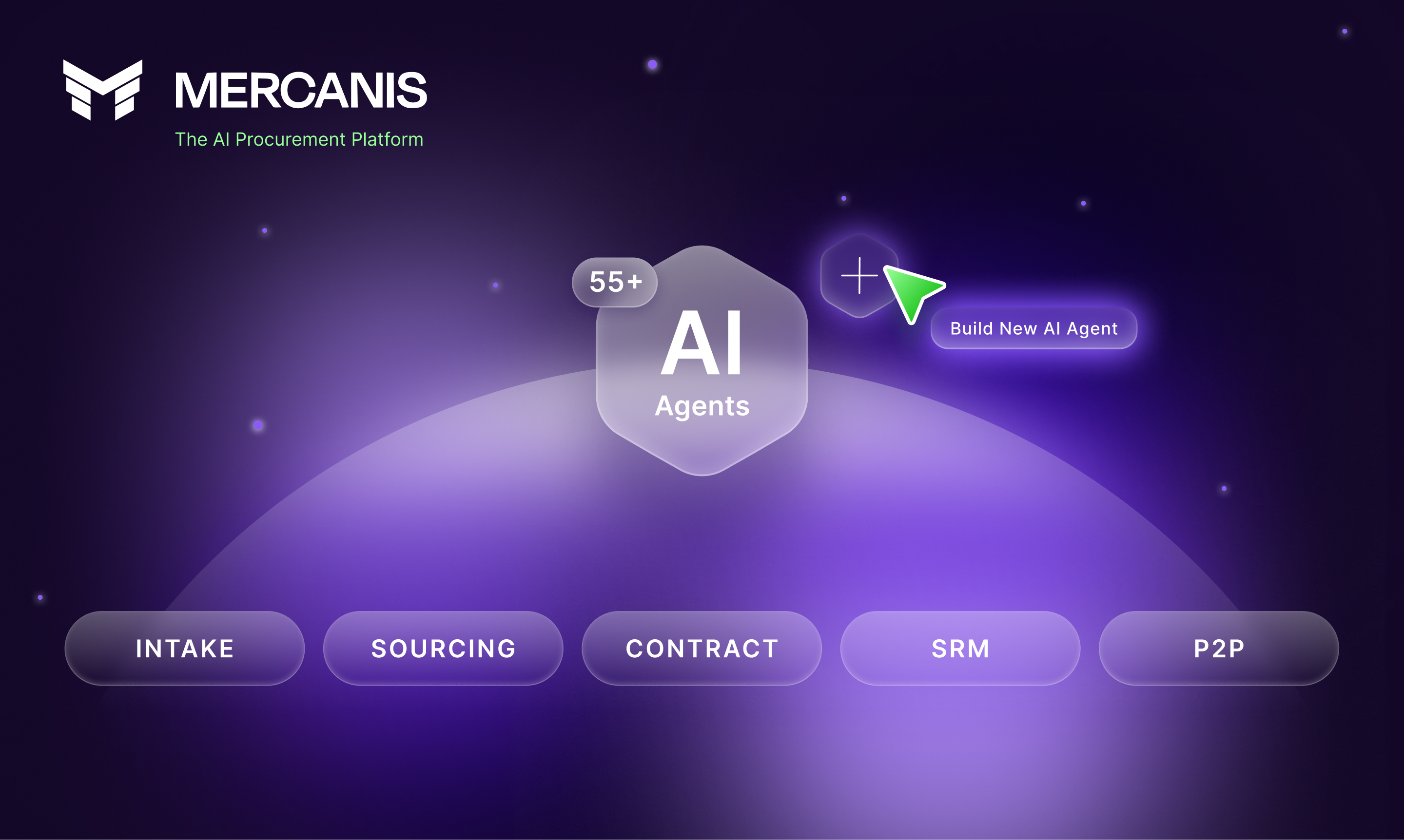
Modern procurement requires a platform where all relevant workflows, Intake, Sourcing, Contract Management, SRM, and Purchase-to-Pay, run on a shared data foundation. On top of that, buyers are supported by AI agents natively embedded in the platform, autonomously handling operational tasks.
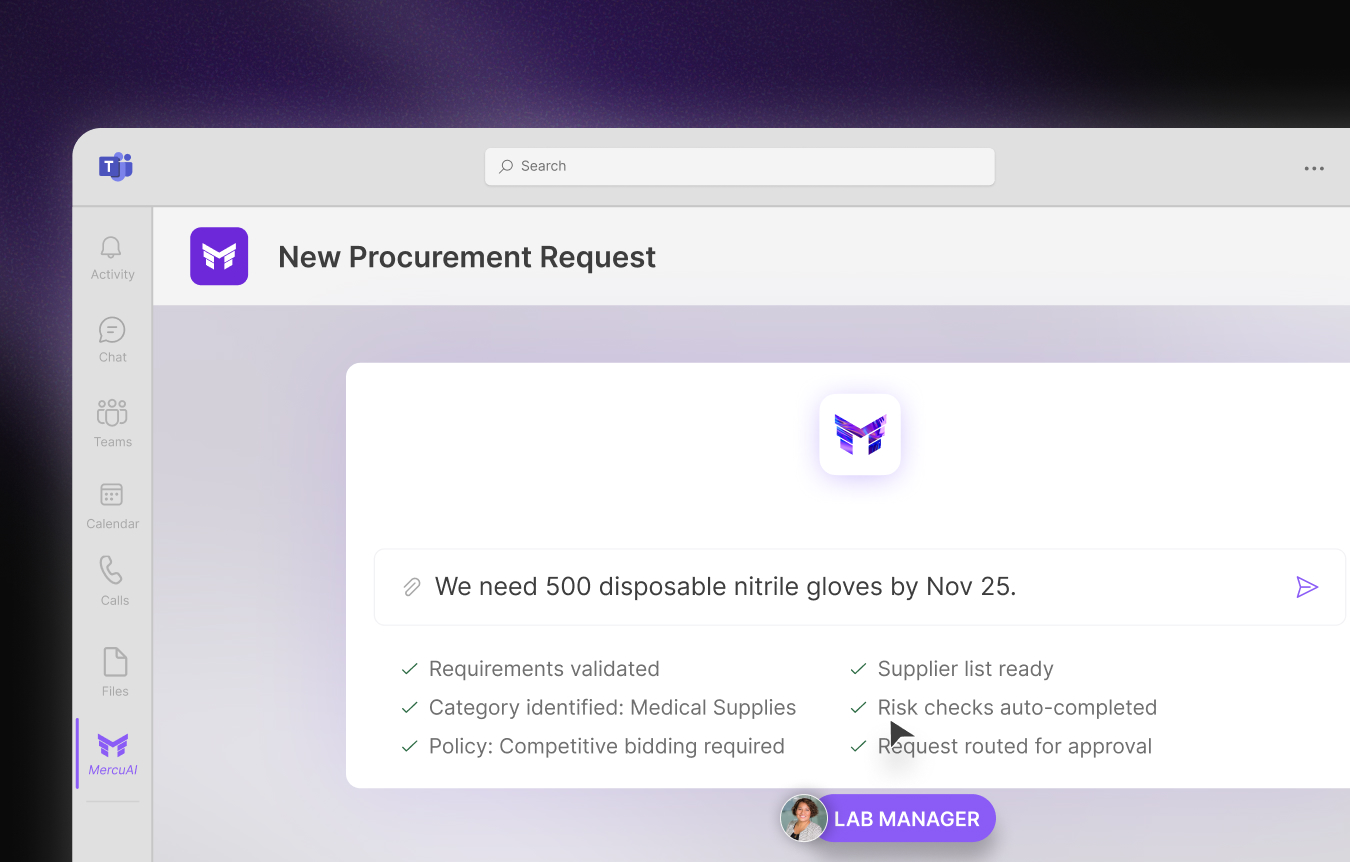
This turns the complexity of procurement into a guided experience with significantly less effort. From the very first step, the process is intelligent and autonomous: the buyer is guided through intake by AI.
The buyer states their need and the Intake Agent asks the right questions, tailored to category, spend level, risk, supplier status, and contract requirements. Approval logic and sourcing rules apply automatically, and the request arrives fully structured in the approval workflow. From there, it flows directly into sourcing, supplier management, and downstream P2P processes. No manual transfer, no system breaks.
This is what modern intake looks like: an intelligent, guided process that ensures accuracy, enforces policy automatically, and eliminates the back-and-forth that has historically slowed procurement teams down.
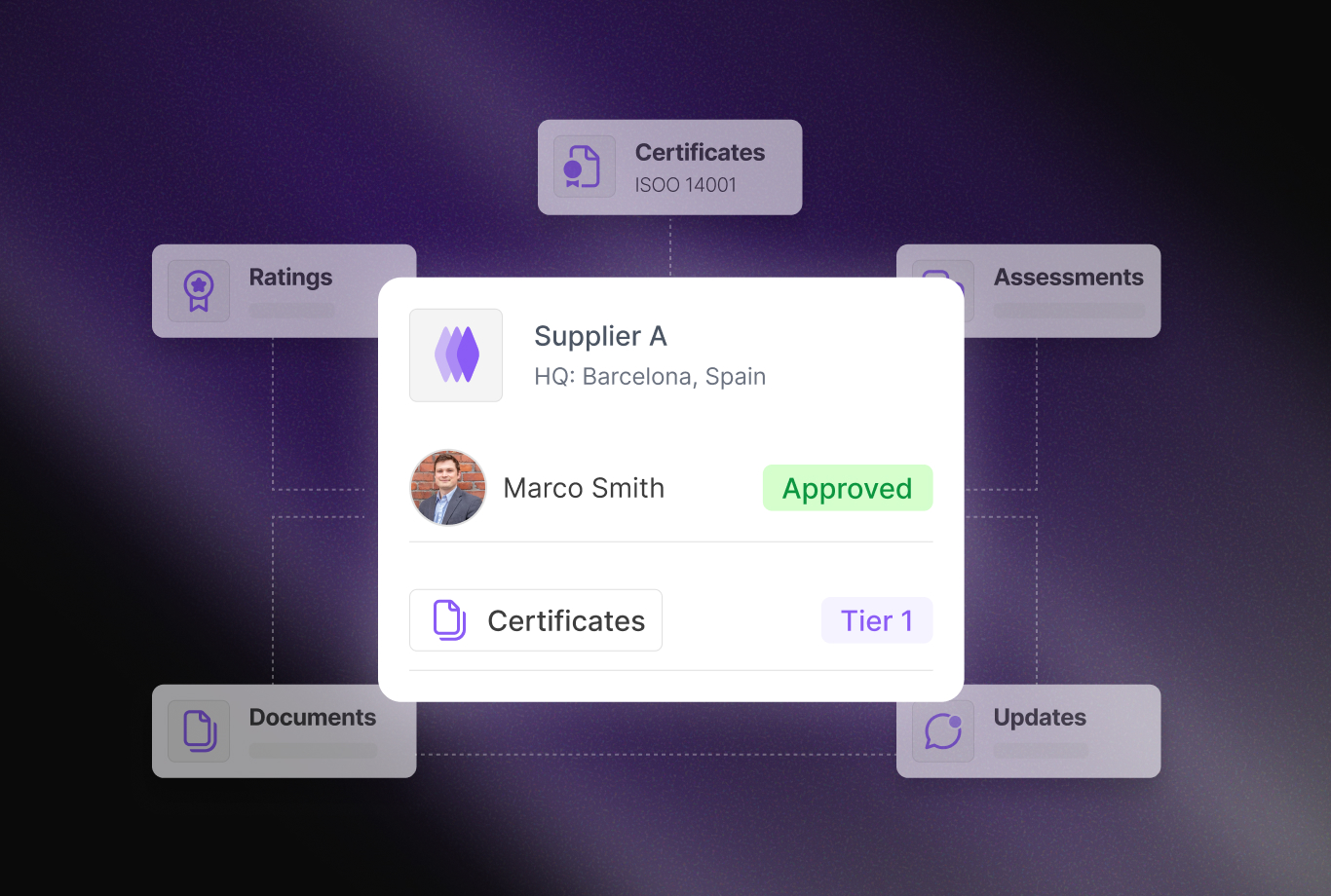
A complete supplier base is the prerequisite for strategic decisions. That is the core of Supplier Relationship Management (SRM). To build this foundation, suppliers go through a clearly structured, AI-supported onboarding process from the start, in which all required data is captured, documents are collected, and approvals are managed automatically. No emails, no spreadsheets, no manual follow-ups. Every supplier starts fully set up, consistent, and ready to work with.
The buyer opens the 360-degree supplier profile of a strategic partner and finds all relevant information in one place: current certificates, active contracts, past orders, and compliance status. No outdated versions, no conflicting data from separate systems. Expiring certificates are automatically followed up on. If a supplier's compliance status changes, it becomes visible early enough to act. What used to be scattered across emails, Excel lists, and individual team members' heads is now structured and accessible.
Buyers are supported by AI agents precisely where they need it most.
The Contract Agent reads, compares, and evaluates contract clauses within seconds. It automatically extracts contract data, identifying line items, prices, terms, and contracting parties. Contracts are actively used rather than sitting in folders. Discounts are no longer lost and manual data entry is eliminated. The agent also analyzes contracts for critical clauses and formal risks, flagging key passages for faster review. Contract turnaround times are significantly accelerated as a result.

AI agents don't just handle administrative tasks. They also multiply the buyer's impact in value-creating activities like negotiations.
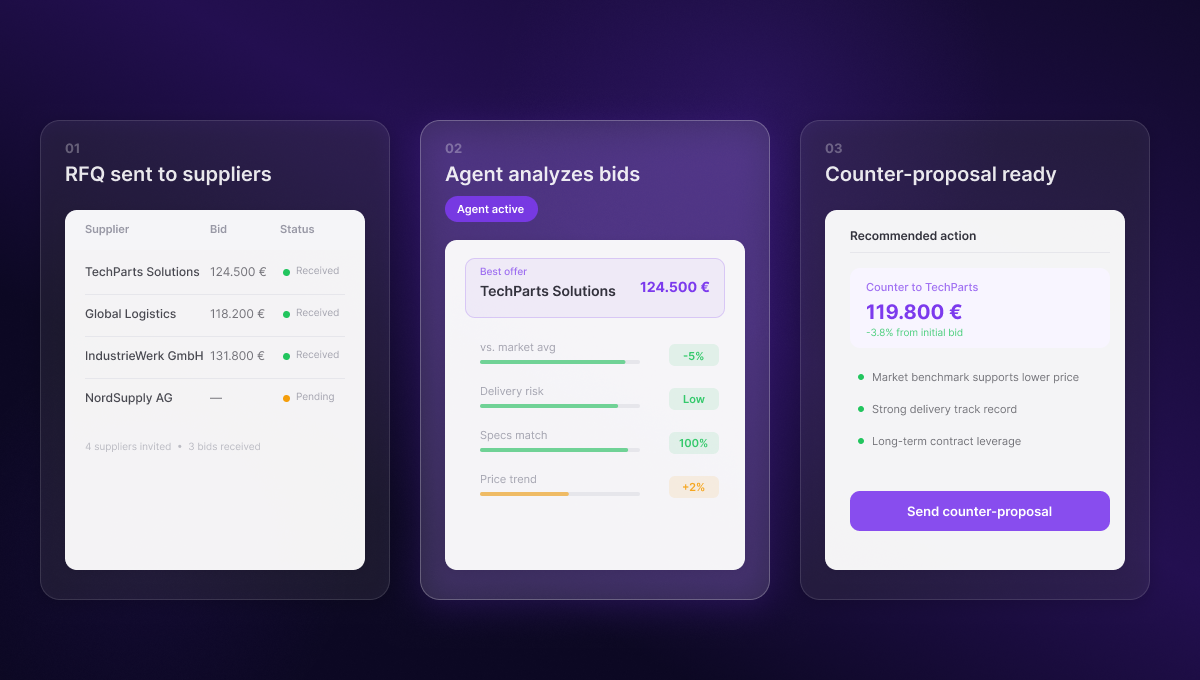
The Negotiation Agent supports negotiations with data, directly via Outlook. The buyer sets the direction, and the agent analyzes counteroffers and suggests data-driven responses. The buyer can review the agent's drafted emails and send them personally, or let the agent run the negotiation fully on its own. The important decisions stay with the buyer, who acts on hard facts and can maximize savings with minimal time investment.
These are exactly the conditions that turn a buyer into a 10x Buyer. A buyer with more time for their core work and ten times the impact. The difference is not that the buyer takes on more tasks, but that their attention is distributed differently. Decisions stay with the buyer. The new structure and the AI agents create the space needed to make them. Five buyers can achieve the output of fifty, not through more work, but because operational work falls away and strategic impact becomes possible.
That this is not just theory is demonstrated by three companies that have already taken this path, and whose results show what capacity becomes available when operational work is systematically relieved.

At AWG, supplier onboarding, which previously tied up capacity for weeks, can now be completed in a fraction of the time. Amer Sports shows the impact directly in measurable time and cost savings. At Weinor, the team saves 38 to 41 percent of their time, gaining noticeably more room for strategic work. In all three cases, the team has not grown larger. They have not received more resources. They have received the opportunity to work differently.
A Different Monday Morning. 8:15 AM.
Same time, different picture. Instead of 47 open tasks, a brief summary from the system: two supplier contracts are ready for a decision. A risk in the supply chain was identified early. The request from the business unit has already been captured and structured, waiting for the buyer's assessment. What the agents prepared overnight would have taken an entire team half a day.
What sits on the desk are not data maintenance tasks. They are questions that actually matter: Which supplier is the right long-term partner? Where might risks emerge before they become visible? What should the sourcing strategy look like for the next quarter?
That is the 10x Buyer. No more headcount, no more hours. The same buyer, with ten times the output.

The 10x Buyer describes a procurement professional who achieves ten times the impact using AI agents and a unified procurement platform, without working more hours. Specialized agents handle operational tasks, freeing up the buyer to focus on strategic decisions.
AI agents autonomously handle operational tasks such as supplier onboarding, certificate management, contract analysis, and negotiation preparation. This gives procurement teams back the capacity they need for strategic work.
An AI agent is an autonomous AI function that independently executes a specific task within the procurement process. Examples include the Intake Agent, which structures and routes requests, the Contract Agent, which analyzes clauses and identifies risks, and the Negotiation Agent, which suggests data-driven response options.
Procurement becomes more strategically effective when operational tasks no longer dominate the day. AI agents handle routine work autonomously, giving buyers more time for supplier decisions, risk assessments, and long-term relationship management.
Manual work in procurement can be reduced through AI agents that automatically handle processes like data maintenance, certificate tracking, and compliance documentation. The prerequisite is a platform where all relevant data comes together centrally.
Procurement teams scale not by hiring more staff, but through a new operating model: AI agents handle operational tasks autonomously while buyers focus on strategic decisions. This allows the same team to achieve significantly more.
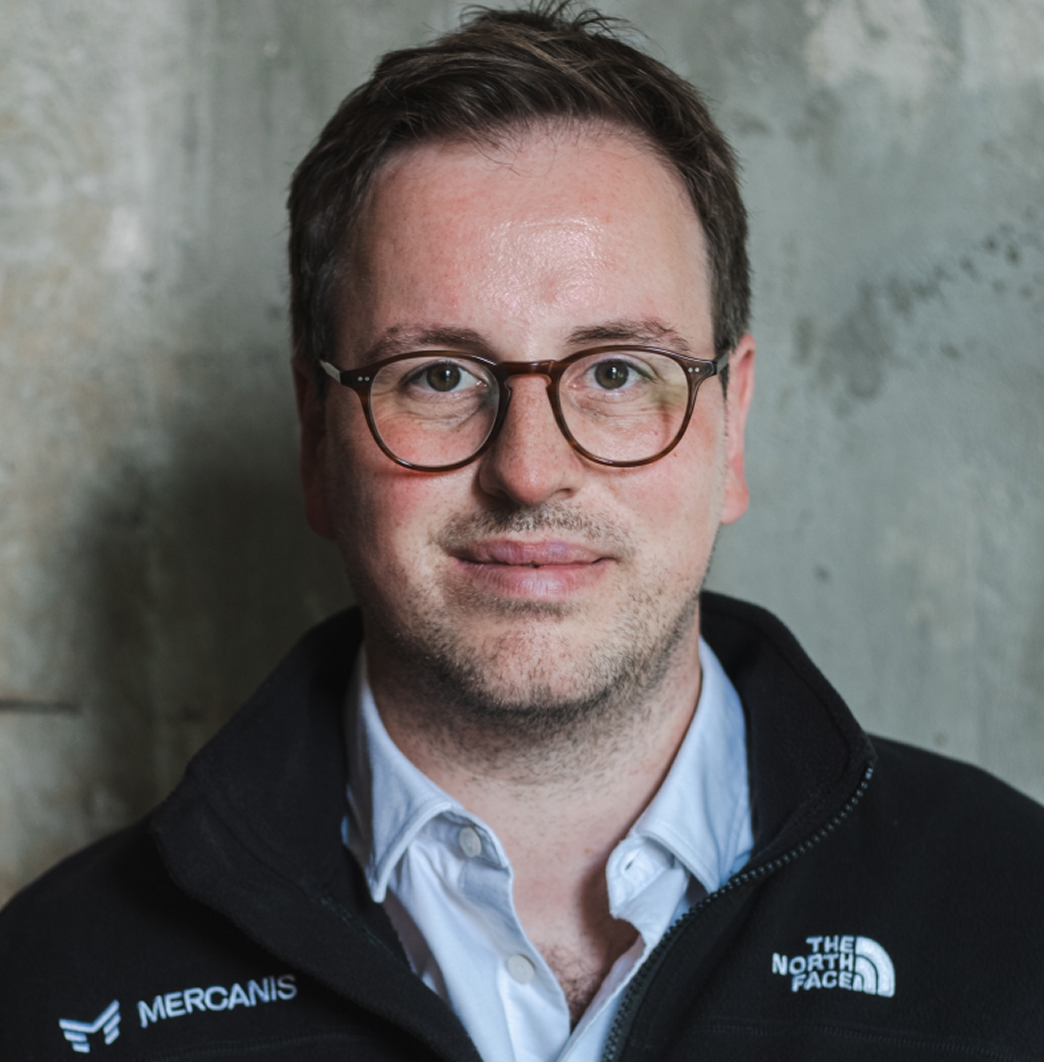

Fabian Heinrich is the CEO and co-founder of Mercanis. Previously he co-founded and grew the procurement company Scoutbee to become a global market leader in scouting with offices in Europe and the USA and serving clients like Siemens, Audi, Unilever. With a Bachelor's degree and a Master's in Accounting and Finance from the University of St. Gallen, his career spans roles at Deloitte and Rocket Internet SE.